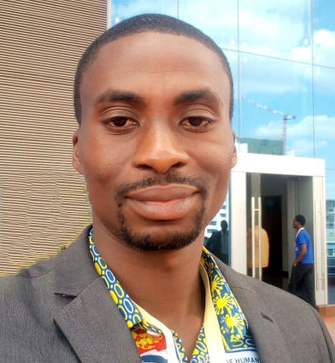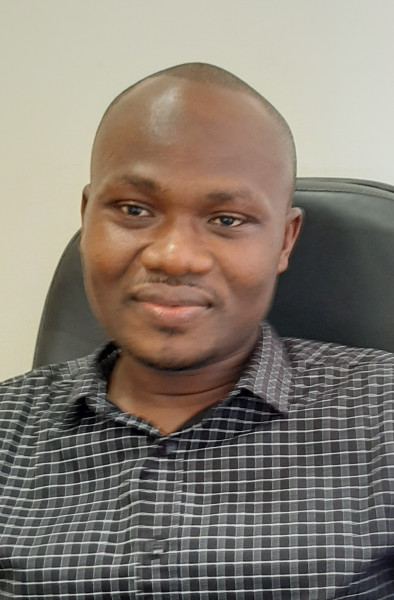
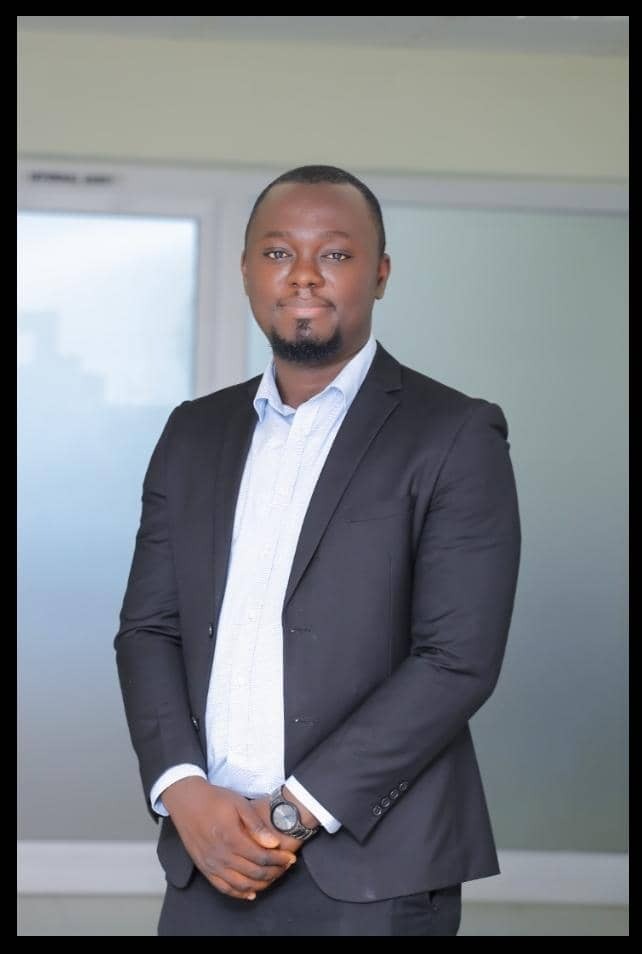
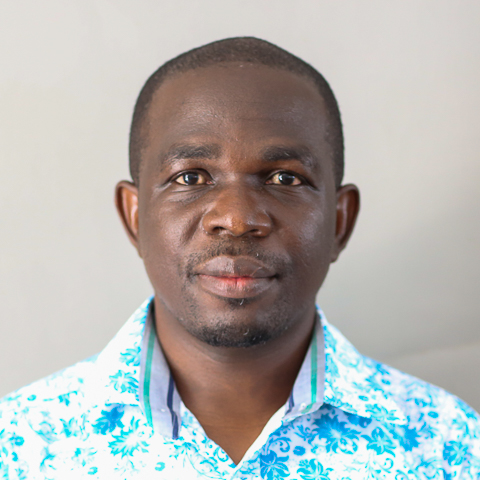
Dr. Richard Adu Agyapong
Updated 2 weeks ago
503 profile views 18 shares · vCards Save vCard · 18

About

With a formidable academic foundation, Dr. Richard Adu Agyapong holds a Master's degree in Management Science and Engineering, complemented by a PhD in the same field. His research interests are a symphony of cutting-edge topics, ranging from Blockchain applications in Business and Supply Chains to Machine Learning in Business Operations, Artificial Intelligence in Projects, Operations, and Supply Chain, Multi-Criteria Decision Making, and their applications in the burgeoning realm of the Circular Economy.

Dr. Richard Adu Agyapong's prowess extends far beyond the realm of academia. His extensive experience in management in China and serving as a Liaison in a Ghanaian conglomerate has honed his ability to lead diverse cross-cultural teams to consistently achieve and exceed organizational goals and targets. This hands-on experience, coupled with his scholarly pursuits, has forged a unique blend of theoretical rigor and practical acumen.

Dr. Richard Adu Agyapong's commitment to excellence transcends the boundaries of his professional endeavors. He is deeply invested in community service, dedicating his time and expertise to trainings, seminars, symposiums, and conferences aimed at developing senior civil servants and corporate management professionals, as well as the youth in Ghana. His passion for empowering others is truly inspiring.

He handles courses such as Design Thinking and Innovation; Innovation and Digital Marketing; Entrepreneurship; Operations Management; Computer Applications in Project Management; Portfolio and Programmes Management amongst others. With an unwavering commitment to excellence, a diverse wealth of knowledge, and a track record of transformative leadership, Dr. Richard Adu Agyapong is glad to be a member of this august university community. 
Teaching & projects

As a university lecturer, my teaching philosophy centers around the concept of experiential learning and incorporates best practices from around the globe. I firmly believe that true understanding and mastery of a subject cannot be achieved solely through lectures and rote memorization; rather, it requires active engagement, hands-on experiences, and the application of knowledge in real-world contexts.

Experiential learning, as conceptualized by theorists like David Kolb and John Dewey, posits that learning is a cyclical process in which students actively engage with the material, reflect on their experiences, conceptualize new ideas, and then experiment with applying those ideas in novel situations. This approach not only enhances knowledge retention but also fosters critical thinking, problem-solving skills, and the ability to adapt to changing circumstances – all invaluable qualities for success in the modern world.

In my lecture room, I strive to create an environment that is dynamic, interactive, and conducive to experiential learning. I incorporate a variety of teaching methods, such as case studies, simulations, project-based learning, and field trips, to provide students with opportunities to apply theoretical concepts to real-world scenarios. These hands-on experiences not only make the material more engaging and memorable but also allow students to develop practical skills and gain insights that cannot be obtained solely from textbooks or lectures.

Furthermore, I place a strong emphasis on collaboration and peer learning. By encouraging students to work in teams, share their perspectives, and learn from one another, I foster an environment that mirrors the collaborative nature of most professional settings. This approach not only enhances students' communication and teamwork skills but also exposes them to diverse viewpoints, promoting intellectual curiosity and an appreciation for different perspectives.

In addition to experiential learning, I incorporate best practices from around the globe into my teaching philosophy. I draw inspiration from innovative pedagogical approaches such as the Socratic method, used in ancient Greece, which encourages critical thinking and dialogue; the Montessori method, which emphasizes self-directed learning and hands-on activities; and the Finnish education system, which prioritizes student well-being and fosters a love for learning.

Ultimately, my goal as a Lecturer is not merely to impart knowledge but to empower students with the skills, mindset, and confidence to become lifelong learners and problem-solvers. By embracing experiential learning and incorporating global best practices, I strive to create an engaging, supportive, and transformative learning environment that prepares students for success in their academic pursuits and beyond.


Teaching philosophy

Colleagues & frequently viewed together

Explore the research constellation See how Richard connects to colleagues — by shared interests, department and who’s viewed together. Open