277 profile views 25 shares · vCards Save vCard · 25

About

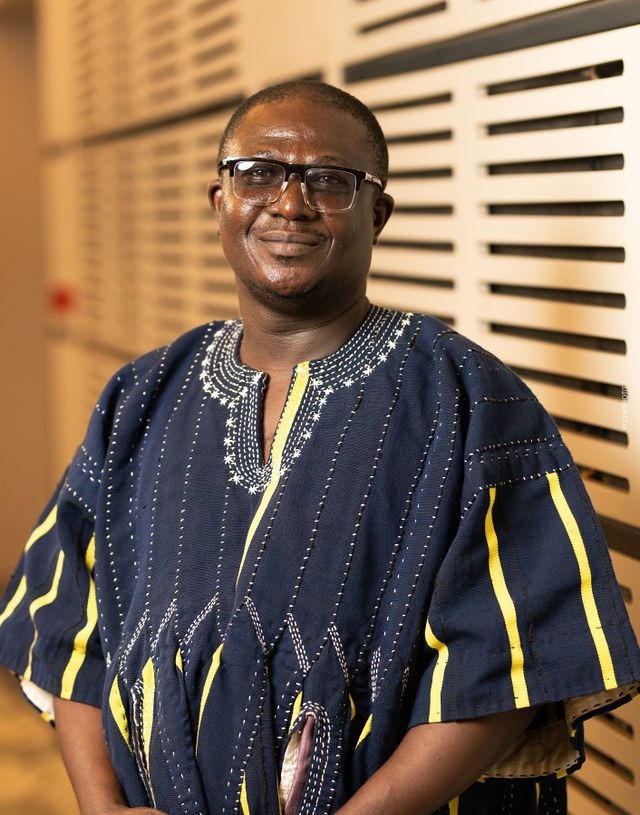
Professor Michael Tetteh Anim is a Ghanaian clinical psychologist, academic, researcher, author, and mental health practitioner. He is an Associate Professor and Head of the Department of Psychological Medicine and Mental Health, School of Medical Sciences, University of Cape Coast. He holds a PhD in Psychology (Clinical), a PhD in Clinical Christian Counselling, an MPhil in Clinical Psychology, a bachelor’s degree in Education (Psychology) Diploma in French, Diploma and Advanced Diploma in Biblical Studies.

He is a licensed professional clinical psychologist with the Psychology Council and a member of the Ghana Psychological Association, the Ghana Academy of Christian Counsellors, and the University Teachers Association of Ghana. He is also the founder and director of Anim Psychological Counselling Services (a non-profit FBO), where he provides psychological assessment, diagnosis, and treatment of adults with mental, emotional and behavioural disorders/difficulties, counselling, psychotherapy, professional training, and mental health education. He has 26 years of formal clinical psychology practice and about 35 years of counselling experience in Ghana first as amateur and then professional.

Professor Anim’s expertise and research interests include clinical and health psychology, psychological medicine, psychoendoneuroimmunology, psychonutrition, stress and coping, African cultural values, spirituality and health, marital counselling, psychological counselling, and psychological factors in sickle cell disease and other chronic illnesses. Using qualitative, quantitative, and mixed-methods research, he examines how biological, psychological, social, spiritual, cultural, and environmental factors influence health and coping. His work integrates established psychological approaches with biblical-theological perspectives to promote culturally responsive and holistic care within Ghanaian and African contexts.

Focus & expertise

Specializations

Background

Career & positions

Head of Department

Department of Psychological Medicine and Mental Health

until Feb, 2022

Teaching & projects

Teaching Philosophy

My central goal as an educator is to develop knowledgeable, compassionate, reflective, and culturally responsive professionals who can translate theory into responsible practice. I want learners to understand that health and human behaviour cannot be adequately explained through a single perspective. Whether I am teaching medical students, psychology and counselling students, health professionals, or community practitioners, I encourage them to see the person as an integrated whole whose wellbeing is influenced by biological, psychological, social, spiritual, cultural, and environmental factors. Successful learning, therefore, is demonstrated not merely by recalling information but by applying knowledge ethically and effectively to real-life human problems.

My teaching is grounded in the biopsychosocial–spiritual–cultural–environmental framework. I use focused lectures to establish essential concepts and then deepen learning through clinical cases, problem-based learning, group discussions, think-pair-share activities, role-plays, reflective exercises, counselling demonstrations, projects, and supervised practical experiences. Ghanaian and wider African case examples enable learners to connect scientific knowledge with the realities of family interdependence, spirituality, stigma, poverty, transportation, healthcare access, cultural beliefs, and community life. Where appropriate, I integrate established psychological and medical evidence with biblical-theological perspectives while teaching students to explore patients’ spiritual beliefs respectfully and without imposing personal beliefs.

I view learners as active participants rather than passive recipients of information. I create opportunities for them to ask questions, examine assumptions, debate different interpretations, practise professional skills, and learn collaboratively. Clinical scenarios involving sickle cell disease, chronic illness, psychological distress, marital and family difficulties, and other health challenges help students move from abstract theory to assessment, formulation, communication, intervention, referral, and evaluation. My long clinical, counselling, research, and academic experience allows me to connect classroom learning with the complexities of professional practice.

Inclusivity is essential to my teaching. Students enter the learning environment with different academic backgrounds, abilities, experiences, cultures, languages, religious identities, and levels of confidence. I therefore explain complex concepts clearly, use varied teaching methods, provide practical examples, encourage both individual and group participation, and create a respectful environment in which learners can express uncertainty without fear of humiliation. I recognise spirituality and culture as important dimensions of many learners’ and patients’ lives while maintaining respect for diverse beliefs and viewpoints. My aim is to ensure that every learner has a meaningful opportunity to participate, develop competence, and experience a sense of belonging.

I assess learning through a combination of formative and summative methods, including knowledge checks, multiple-choice questions, case analyses, group presentations, reflective assignments, projects, practical demonstrations, and clinical skills assessments such as mini-OSPEs. I design assessments to measure not only factual knowledge but also critical thinking, ethical reasoning, communication, cultural sensitivity, clinical judgement, and the ability to integrate multiple dimensions of care. Constructive feedback helps learners recognise their strengths, correct misconceptions, and identify specific areas for improvement.

Teaching is also a continuing learning process for me. I use students’ questions, assessment results, classroom participation, formal evaluations, and professional feedback to review my methods and improve my courses. I reflect on whether learners can apply what they have learned, revise areas that remain unclear, and incorporate relevant developments in psychological science, medicine, mental health, neuroscience, spirituality, and education. Ultimately, my teaching seeks to unite knowledge with compassion, science with context, and professional competence with ethical service. I aim to prepare learners who can think critically, care for the whole person, collaborate across disciplines, and contribute meaningfully to healthcare and human wellbeing in Ghana, Africa, and beyond.


Teaching philosophy

Publications 12 works

ORCID 0000-0002-8686-6141 →

2023

Religious coping and depressive symptoms in people living with HIV in Ghana

Felix Yirdong, Michael T. Anim, Anthony K. Nkyi, Frederick Ocansey

Mental Health Religion & Culture · Article · 3 citations · Source: OpenAlex

2022

African cultural values in the biopsychosocial-spiritual care model to manage psychological symptoms in adults with sickle cell disease in Ghana, West Africa

Michael T. Anim, Charles Atanga Adongo, Felix Yirdong

Mental Health Religion & Culture · Article · 5 citations · Source: OpenAlex

Palliative care practices among nurses at Cape Coast Teaching Hospital, Ghana: A cross-sectional study

Abigail Boatemaa Owusu, Alhassan Basour Adam, Jacob Setorglo, Michael T. Anim et al.

International Journal of Africa Nursing Sciences · Article · 5 citations · Source: OpenAlex

2021

Use of the nursing process for patient care in a Ghanaian Teaching Hospital: A cross sectional study

Wahab Osman, Jerry Paul Ninnoni, Michael T. Anim

International Journal of Africa Nursing Sciences · Article · 8 citations · Source: OpenAlex

2018

Gender and Phenotype Differences in Spirituality in Adults Coping with Sickle Cell Disease in Ghana: Preliminary Findings

Michael T. Anim

Psychology and Behavioral Science International Journal · Article · Source: OpenAlex

2016

Prevalence of psychological symptoms among adults with sickle cell disease in Korle-Bu Teaching Hospital, Ghana

Michael T. Anim, Joseph Osafo, Felix Yirdong

BMC Psychology · Article · 20 citations · Source: OpenAlex

2015

African Cultural Values and Psychological Health in Adult Persons with Sickle Cell Disease in Ghana

Michael T. Anim

Dissertation · Source: OpenAlex

2013

Psychosocial Factors Influencing Marital Distress In Ghanaian Married Couples

Michael T. Anim

Research on humanities and social sciences · Article · 4 citations · Source: OpenAlex

Level of education and marital distress in Ghanaian married couples

Michael T. Anim

Ghana Journal of Health Physical Education Recreation Sports and Dance (GJOHPERSD) · Article · Source: OpenAlex

2012

A Study of Work Related Depression, Anxiety and Stress of Nurses at Pantang Hospital in Ghana

Samuel Atindanbila, Edward Abasimi, Michael T. Anim

Research on humanities and social sciences · Article · 17 citations · Source: OpenAlex

Effects of sleep deprivation on students' learning: a study of medical students in University of Cape Coast

Felix Yirdong, Michael T. Anim

Article · 2 citations · Source: OpenAlex

2010

A Study of Assertiveness as a Psychological Factor Influencing Marital Distress in Ghana

Michael T. Anim

Article · Source: OpenAlex

OpenAlex updated 20 Sep 2026

Colleagues & frequently viewed together

Explore the research constellation See how Michael connects to colleagues — by shared interests, department and who’s viewed together. Open