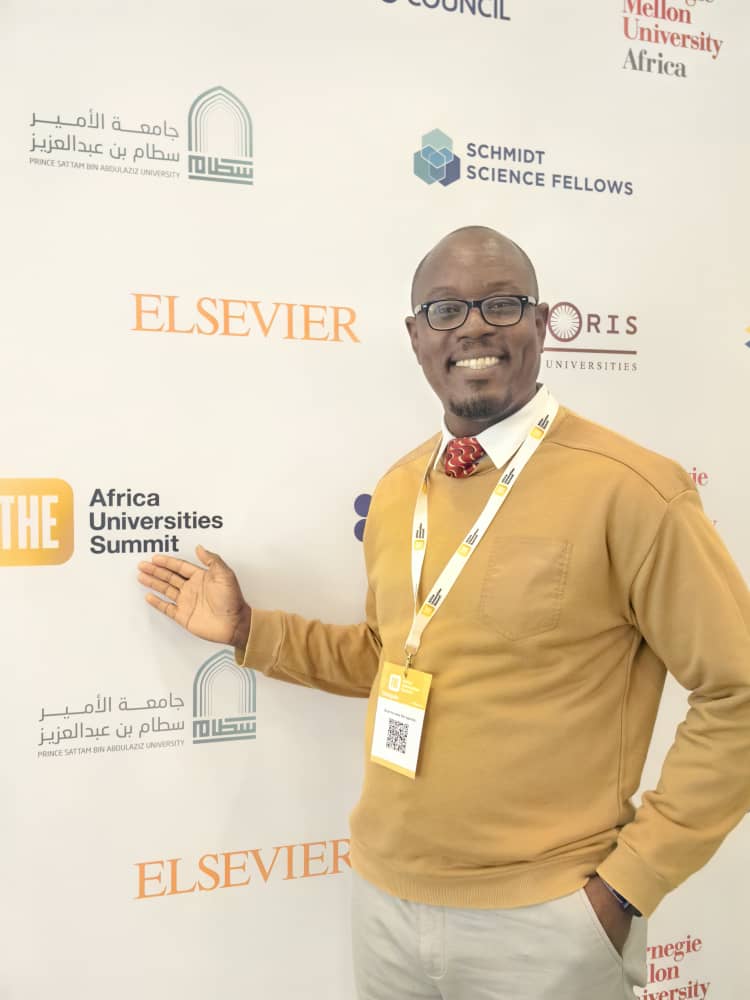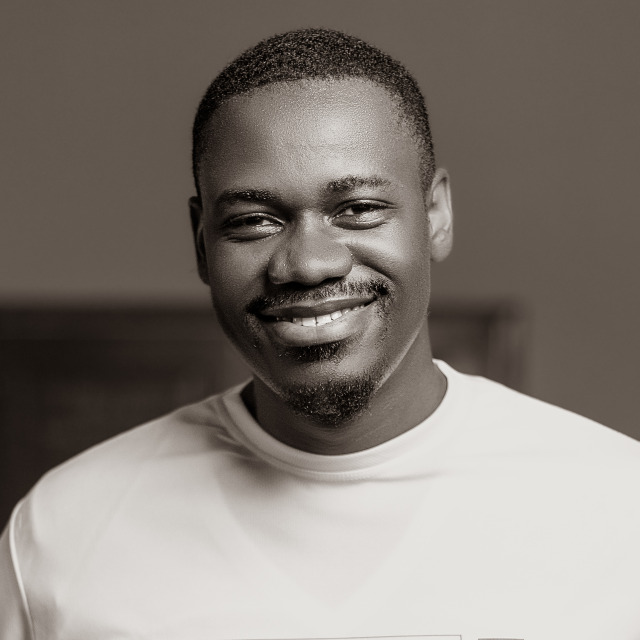
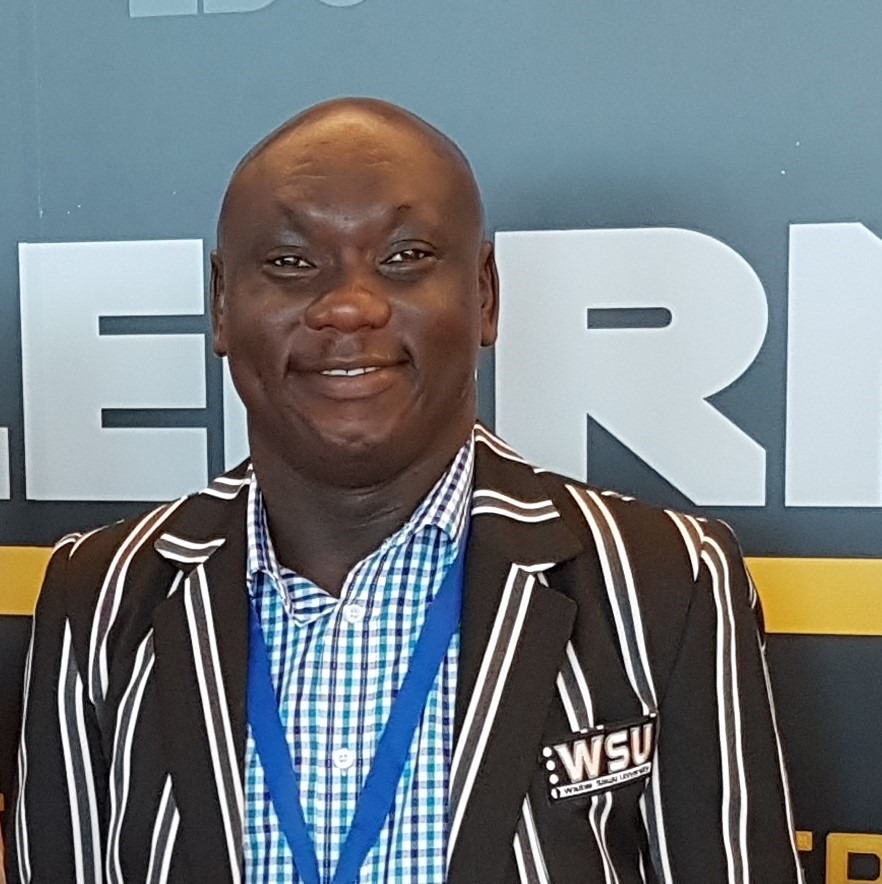
Dr. Martin Adane is a Lecturer in the Department of Mathematics and ICT Education, Faculty of Science and Technology Education, University of Cape Coast, Ghana. He holds a PhD in Information Systems from the University of Fort Hare, South Africa, an MEd in Information Technology and a BSc in Chemistry from the University of Cape Coast. His research centres on ICT integration in education, artificial intelligence, cloud computing adoption, e-learning, computer science education, and inclusive design, with a particular focus on infrastructure constraints and equity in African educational contexts. He has taught at institutions in Ghana and South Africa, including Walter Sisulu University and the University of Fort Hare, and has published in journals such as the African Journal of Science, Technology, Innovation and Development. He coordinates the Global Code Summer Program and the Supported Teaching in Schools programme within his department, and serves as College Representative for Data Archiving at UCC's Directorate of Research, Innovation and Consultancy.
About
Focus & expertise
Specializations
Academic interests · number = colleagues who share it
Recent activity
3rd International Conference on Education Research for Development in Africa (ICERDA),
11th International Conference on Education and New Learning Technologies (EDULEARN19)
2nd UNIVEN-WSU International Research Conference
Background
🎓 Education & qualifications
Doctor of Philosophy in Information Systems
University of Fort Hare
2017
Master of Education in Information Technology
University of Cape Coast
2009
Postgraduate Diploma in Education
University of Cape Coast
2009
Bachelor of Science in Chemistry
University of Cape Coast
2003
Teaching & projects
I teach on the premise that educational technology is only as good as its fit with where it's actually used. In Ghana, and across a lot of Sub-Saharan Africa, that means uneven infrastructure, connectivity that comes and goes, and students walking in with wildly different amounts of prior exposure to digital tools. My own research on ICT adoption barriers in Ghanaian schools, and on pre-service teachers' STEM and coding competencies, is what pushed me here. I build courses assuming the network will drop at some point, not assuming it won't. And I tell students directly where a given tool or method stops working the moment you leave a well-resourced setting because most of them are going to teach somewhere that isn't one.
Project-based and problem-based learning are how I teach most ICT and STEM content. Instead of walking through a fixed set of procedures, I hand students real constraints: design something that still works on low bandwidth, or evaluate a tool for accessibility before you adopt it, not after. Pre-service teachers heading into under-resourced schools need practice weighing trade-offs. Familiarity with a demo built for a classroom with money behind it doesn't get them very far.
There's one question I keep putting back to students about every tool we cover, and it's basically the same question every time: who does this actually work for, and who gets left out? That comes straight out of my own research interest in accessibility and assistive technology. I expect them to ask it of their own future teaching, not just of whatever I put in front of them.
I'm also wary of overselling what educational technology can do. A lot of the current enthusiasm for AI in education is running ahead of the evidence, particularly once you're in a setting that looks nothing like where that evidence was generated. I try to model that skepticism in class. Before we decide whether or how to adopt something, we look at what the claim is actually resting on, not just what it promises.
Supervision counts as teaching too, as far as I'm concerned. Postgraduate and undergraduate research projects, the Global Code Summer Program, all of it. The goal does not change: help students build the judgment to evaluate technology and evidence on their own, in the environments they will actually be working in, not the idealized ones the literature tends to describe.
Publications 8 works
2022
Martin Adane
African Journal of Science Technology Innovation and Development · Article · 6 citations · Source: OpenAlex + ORCID
2020
Journal article · Source: ORCID
2019
Journal article · Source: ORCID
Conference paper · Source: ORCID
2018
Martin Adane
African Journal of Science Technology Innovation and Development · Article · 24 citations · Source: OpenAlex
Journal article · Source: ORCID
2011
PD Ahiatrogah, Martin Adane
IFE PsychologIA · Article · Source: OpenAlex + ORCID
2009
Martin Adane
Dissertation · Source: OpenAlex
OpenAlex updated 10 Sep 2026
Engagements
📅 Conferences attended
Honors & affiliations
Colleagues & frequently viewed together
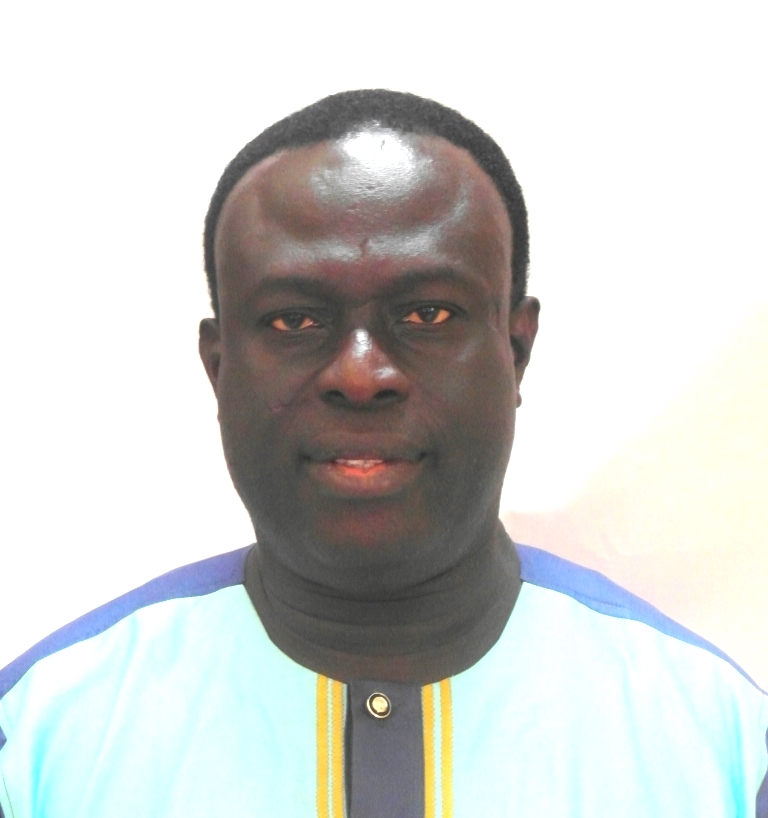 Prof. Eric Magnus Wilmot
Associate Professor · Department of Mathematics & ICT Education
›
Prof. Eric Magnus Wilmot
Associate Professor · Department of Mathematics & ICT Education
›
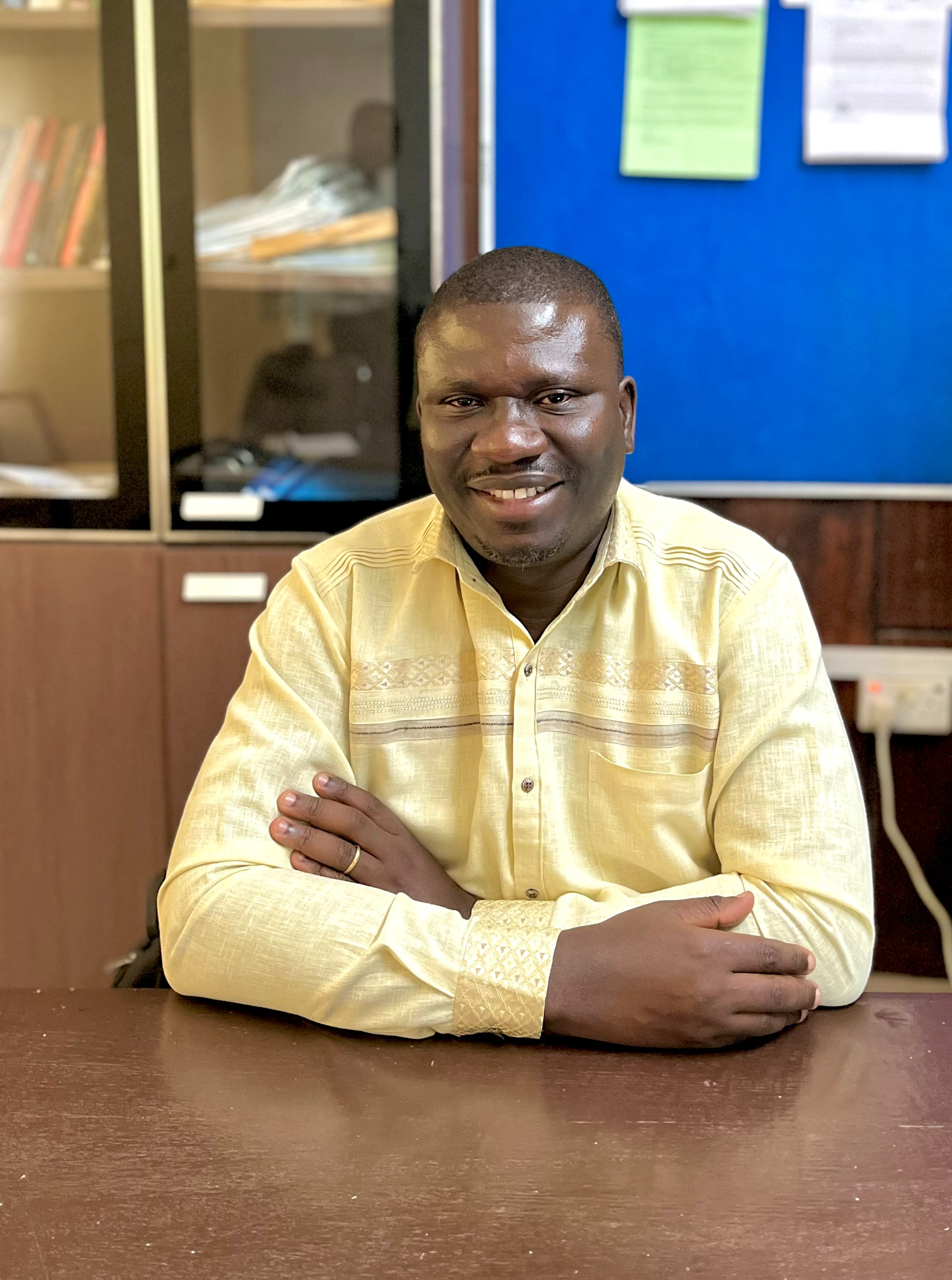 Prof. Forster Danso Ntow
Associate Professor · Department of Mathematics & ICT Education
›
Prof. Forster Danso Ntow
Associate Professor · Department of Mathematics & ICT Education
›
 Dr. Bernard Wiafe Akaadom
Senior Lecturer · Department of Mathematics & ICT Education
›
Dr. Bernard Wiafe Akaadom
Senior Lecturer · Department of Mathematics & ICT Education
›
 Dr. Christopher Yarkwah
Senior Lecturer · Department of Mathematics & ICT Education
›
Dr. Christopher Yarkwah
Senior Lecturer · Department of Mathematics & ICT Education
›
 Dr. Simon-Peter Kafui Aheto
Lecturer · Department of Mathematics & ICT Education
›
Dr. Simon-Peter Kafui Aheto
Lecturer · Department of Mathematics & ICT Education
›
 Dr. Rosemary Twum
Senior Lecturer · Department of Mathematics & ICT Education
›
Dr. Rosemary Twum
Senior Lecturer · Department of Mathematics & ICT Education
›
 Mr. Gideon Enoch Abbeyquaye (Esq)
Registrar · Office of the Registrar
Databases
›
Mr. Gideon Enoch Abbeyquaye (Esq)
Registrar · Office of the Registrar
Databases
›
 Dr. Elliot Kojo Attipoe
Assistant Lecturer · Department of Computer Science and Information Technology
Artificial Intelligence
›
Dr. Elliot Kojo Attipoe
Assistant Lecturer · Department of Computer Science and Information Technology
Artificial Intelligence
›
 Dr. Joshua Sebu
Senior Lecturer · Department of Data Science and Economic Policy
Data Analytics
›
Dr. Joshua Sebu
Senior Lecturer · Department of Data Science and Economic Policy
Data Analytics
›
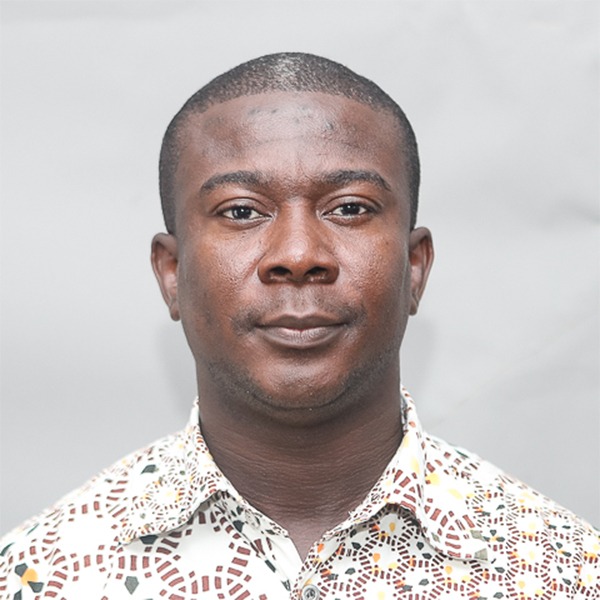 Mr. Gabriel Annan Dowuona
Principal ICT Assistant · College of Humanities and Legal Studies
Cloud Computing
›
Mr. Gabriel Annan Dowuona
Principal ICT Assistant · College of Humanities and Legal Studies
Cloud Computing
›
 Mr. Daniel Osei
Accountant · Directorate of Finance
Data Analytics
›
Mr. Daniel Osei
Accountant · Directorate of Finance
Data Analytics
›
 Mr. Obed Barnes
Assistant Systems Analyst · Management Information Systems Section
Databases
›
Prof. Eric Magnus Wilmot
Associate Professor · Department of Mathematics & ICT Education
›
Dr. Bernard Wiafe Akaadom
Senior Lecturer · Department of Mathematics & ICT Education
›
Mr. Obed Barnes
Assistant Systems Analyst · Management Information Systems Section
Databases
›
Prof. Eric Magnus Wilmot
Associate Professor · Department of Mathematics & ICT Education
›
Dr. Bernard Wiafe Akaadom
Senior Lecturer · Department of Mathematics & ICT Education
›
 Mr. David Kwabena Ofosu-Hamilton
Assistant Lecturer · Department of Forensic Sciences
›
Dr. Mohammed Nurudeen Alhassan
Lecturer · Department of Mathematics & ICT Education
›
Prof. Forster Danso Ntow
Associate Professor · Department of Mathematics & ICT Education
›
Dr. Rosemary Twum
Senior Lecturer · Department of Mathematics & ICT Education
›
Mr. David Kwabena Ofosu-Hamilton
Assistant Lecturer · Department of Forensic Sciences
›
Dr. Mohammed Nurudeen Alhassan
Lecturer · Department of Mathematics & ICT Education
›
Prof. Forster Danso Ntow
Associate Professor · Department of Mathematics & ICT Education
›
Dr. Rosemary Twum
Senior Lecturer · Department of Mathematics & ICT Education
›