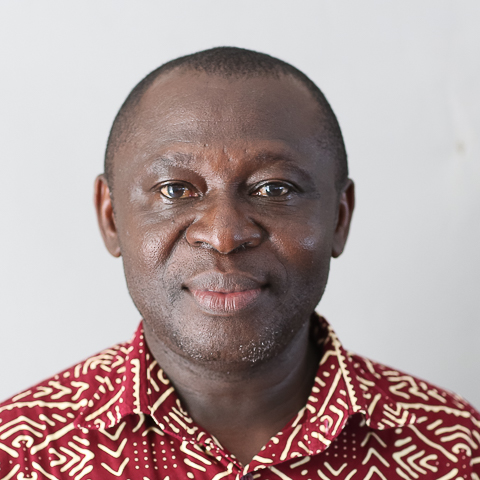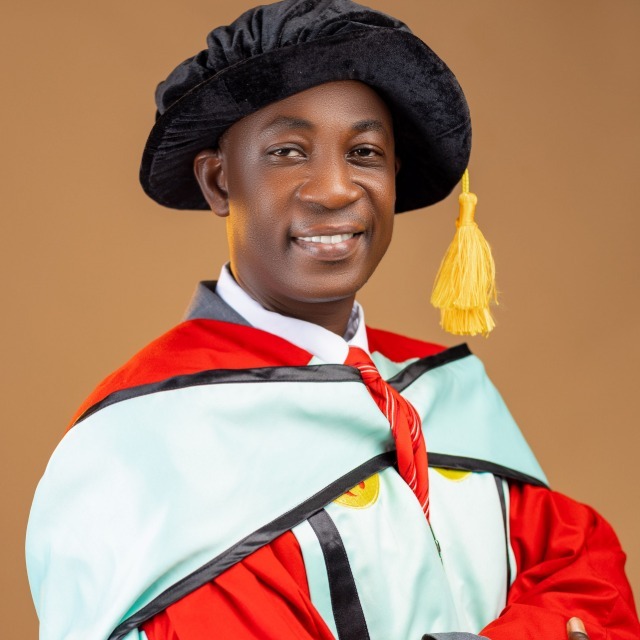
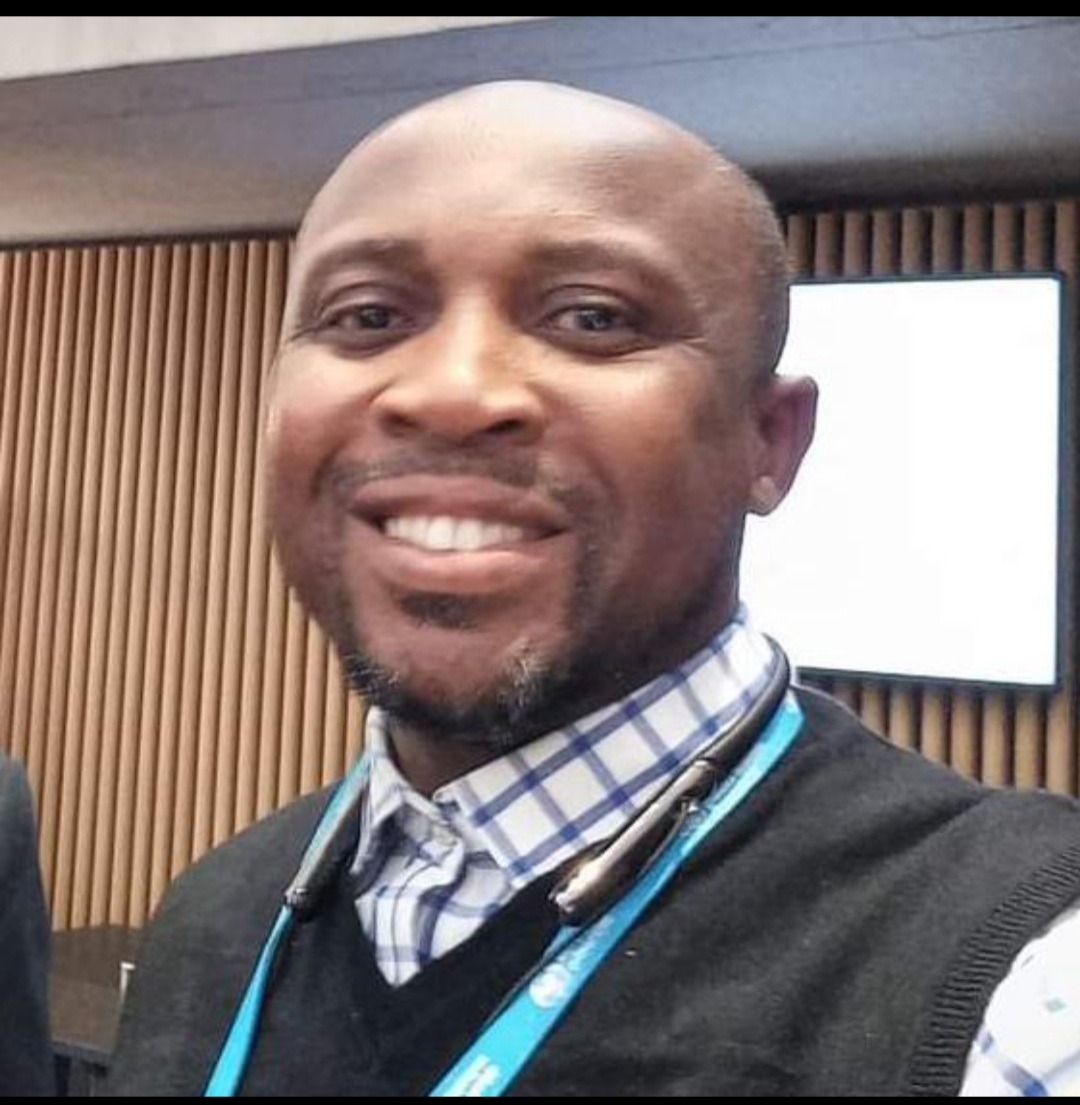
Prof. Eric Koka is an Associate Professor and a distinguished academic, researcher and public health scholar at the University of Cape Coast (UCC), Ghana. He is currently the Head of the Department of Epidemiology, School of Public Health, College of Health and Allied Sciences, University of Cape Coast.
Prof. Koka received his university education from the University of Cape Coast, where he pursued his undergraduate (Economics and Sociology) and postgraduate (Medical Sociology) studies. He subsequently undertook advanced professional and academic training at the School of Public Health, University of Ghana, Legon, culminating in a PhD in Public Health, with a specialization in the Social and Behavioural Sciences. His doctoral training has provided a strong foundation for his interdisciplinary work at the intersection of sociology, epidemiology and public health. His academic development has therefore been firmly grounded in the social sciences and public health, enabling him to apply sociological and behavioural perspectives to the understanding and prevention of health problems.
Prof. Koka's scholarship is multidisciplinary, with particular expertise in Medical Sociology, Public Health, Social and Behavioural Sciences, Epidemiology, Health Behaviour and Health-Seeking Behaviour. His research focuses on understanding the social, cultural, behavioural and structural factors that influence health and healthcare outcomes.
His areas of research and professional interest include: Medical Sociology and Public Health, Social and Behavioural Epidemiology, Health-seeking behaviour and healthcare utilisation, Disease prevention and health promotion, Community health and primary healthcare, Neglected Tropical Diseases (NTDs), particularly skin NTDs, Leprosy and stigma associated with infectious diseases,, Buruli ulcer and community health-seeking behaviour, Antimicrobial resistance (AMR), antimicrobial use and behaviour change, Adolescent and community health, Health inequalities and social determinants of health, Behaviour change and community engagement and One Health and interdisciplinary approaches to public health.
His research record demonstrates substantial engagement with infectious diseases, health behaviour and community-based public health interventions. For example, he has contributed to research on leprosy and other skin neglected tropical diseases in Ghana, including community knowledge, attitudes and behaviours. He has also contributed to research examining antimicrobial use and resistance across livestock systems in Africa.
Prof. Koka has additionally contributed to research on the effects of COVID-19 lockdown measures on maternal and child health in Ghana, demonstrating his broader interest in population health and the social dimensions of public health emergencies.
Prof. Koka has built a strong profile as a researcher whose work bridges social science and public health. His research employs quantitative, qualitative and mixed-methods approaches to investigate how individual behaviour, social norms, cultural beliefs, community structures and health-system factors influence health outcomes.
His research and collaborative activities have included work supported by international organisations and research programmes, including the Food and Agriculture Organization of the United Nations (FAO) and the World Health Organization (WHO). Prof. Eric Koka is a National Social Scientist on an FAO-supported antimicrobial-use and resistance project and served as Co-Investigator on an adolescent health study managed by WHO. He collaborated on a National Institute for Health Research (NIHR),UK, funded project titled 'Improving the experiences of severe stigmatising skin diseases in Ghana and Ethiopia' as a social scientist with the Noguchi Memorial Institute for Medical Research, University of Ghana. He also collaborated on a United Kingdom Institute for Research funded project titled 'Maximising benefits and minimising the harm of COVID-19 control measures on child and women’s health in four Sub-Saharan African countries'. He consults for some Ghana Health Service Neglected Tropical Diseases Control Programmes/Projects as a Research and Social Scientist. These experiences have positioned him to contribute meaningfully to interdisciplinary research, postgraduate education, evidence-informed policy and the development of innovative public health interventions.
As Head of the Department of Epidemiology, he is committed to strengthening epidemiological education, research capacity, interdisciplinary collaboration and evidence-informed public health practice in Ghana and beyond.